

A borrower in a small town receives a call. The voice on the other end speaks in her language. It explains her loan, her repayment schedule, and what happens if she misses a payment. Clearly, patiently, and without judgment. She asks questions she was never comfortable asking before. The answers are instant, consistent, and accurate. For the first time, she understands what she has signed up for.
For decades, the real barrier to financial access was not money, it was understanding what you had signed up for. Contracts were signed in languages people did not speak. Terms were explained differently each time. Repayment obligations were often unclear until it was too late. In many cases, informal intermediaries became the voice of institutions. Sometimes they were helpful, sometimes they were not.
As financial services scaled digitally, this gap between systems and lived reality became harder to ignore. Technology was present but clarity, consistency, and trust were uneven.
The Pilot-to-Production Gap
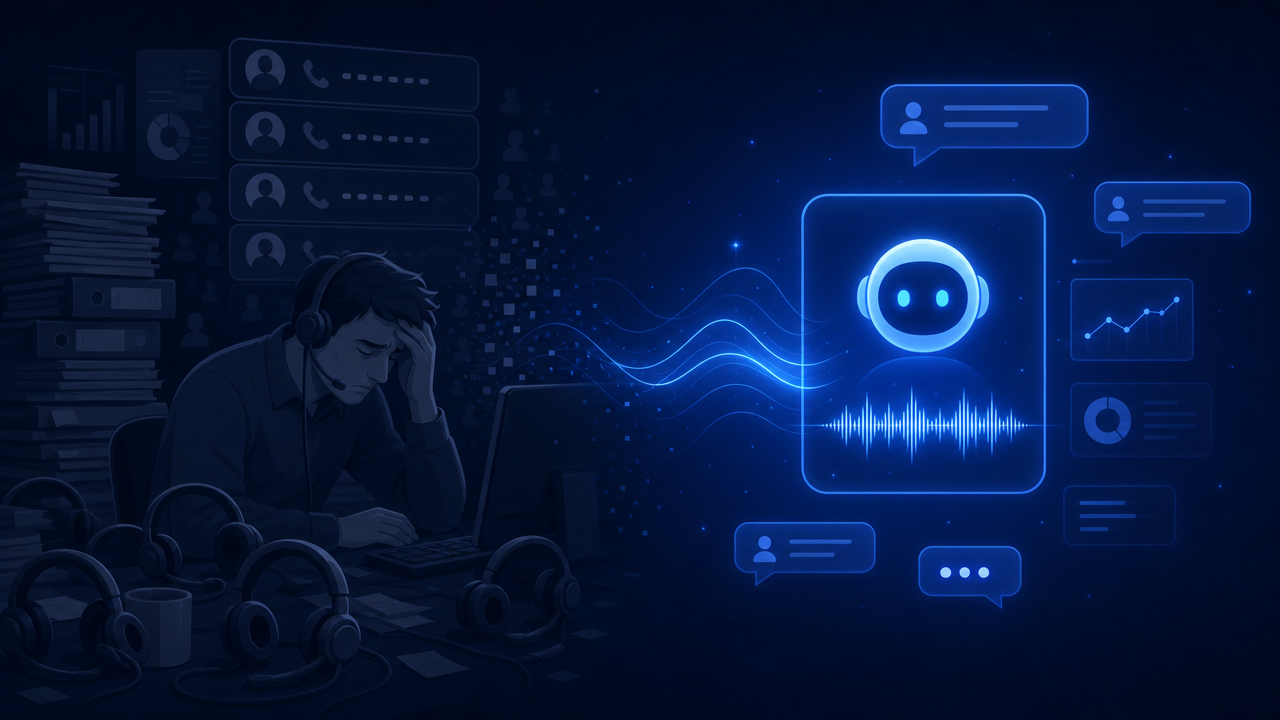
For many organisations, AI still lives in presentations and proof-of-concepts. While there is no shortage of excitement around AI, most pilots never see the light of the day. That's because an idea might seem great on presentation and on paper, but it doesn't fit into the real world in how organisations operate. Early AI systems were built with clean datasets in controlled environments, but the real world is nothing short of chaotic. Data is scattered, processes are unstandardised, and a lot of decisions depend on human context and experience.
What is changing now is the approach. Instead of building AI first and then trying to apply it, organisations are starting with the workflow. They are observing how customer calls are handled, how documents are processed, and how decisions actually get made.
This shift is moving AI from being a standalone tool to becoming part of enterprise infrastructure, being embedded into the design of the workflows.
AI in Regulated Environments
As Mathangi Sri Ramachandran (CEO of YuVerse) observes in her conversation with the Economic Times at the AI Impact Summit, two clear patterns are starting to emerge in terms of AI adoption.
The first is where AI works independently. These are systems that interact directly with customers, like Voice agents (AI that talks to customers on phone calls), conversational assistants (AI chat that answers questions and guides users), and automated collections workflows (AI that manages repayment reminders and follow-ups). They need to respond in real time. A customer on a call cannot be put on hold while the system asks a human what to do. In these situations, speed and consistency are key.
The second is where AI supports, rather than replaces, human decision-making. This is more common in high-stakes workflows such as large loan approvals, compliance reviews, or risk assessments. Here, the final accountability still sits with a person. AI helps by analysing data, identifying patterns, and making recommendations, but the decision remains human. This is important because real-world situations are often layered and contextual. For example, a farmer facing a failed crop season may need a different repayment cycle rather than a standard one.
Interestingly, resistance is often higher in this second category. When AI starts influencing important decisions, employees may see it as a threat to their roles. This is because their work has traditionally been built around judgment, experience, and accountability, and the idea of a machine shaping those outcomes can feel like a loss of control rather than support. This makes adoption about trust and communication.
This highlights a broader reality. Successful AI transformation is about designing systems that people understand, trust, and feel comfortable working alongside with.
Governance Beyond Compliance
This also raises an important question: how should AI be governed in industries where every decision has real consequences?
As AI becomes more embedded in financial systems, governance is moving to the centre of the conversation. During her interaction at the India AI Impact Summit, Mathangi Sri Ramachandran highlighted that global frameworks such as the General Data Protection Regulation and the EU Artificial Intelligence Act are already shaping how enterprises think about privacy, accountability, and risk. She also noted that while India's regulatory landscape is still evolving, organisations cannot afford to wait for formal mandates before building responsible systems.
In her view, governance should be designed into how AI systems operate, ensuring transparency, accountability, and fairness from the start, not as an afterthought.
"At the core of it, everything is about how empathetically you build systems."
In high-trust sectors such as banking and microfinance, this becomes especially important. Automated decisions affect livelihoods and long-term financial outcomes, making trust a critical factor.
Embedding Intelligence into Everyday Operations
This is where the idea of "lifestyle AI" is beginning to gain traction. The premise is simple: having access to something and understanding it are not the same. Bridging this gap requires intelligence that can listen, interpret, and respond in context.
Mathangi's company, YuVerse, is developing solutions around this shift, embedding AI into daily enterprise operations rather than offering isolated tools. The focus is on integrating intelligence into customer conversations, document workflows, risk decisions, and compliance processes. Their capabilities span conversational AI, document intelligence, multimodal interfaces across voice, video, vision, and text, and dynamic risk models.
But the differentiator lies in deployment. These systems are designed to operate at production scale, handling millions of conversations and document workflows across sectors such as banking and microfinance.
At the India AI Impact Summit, this approach was visible in real time. The launch of an AI-powered WhatsApp concierge showed how conversational interfaces are becoming gateways to enterprise ecosystems. Users could generate personalised AI videos, scan brochures into structured insights, and interact directly with intelligent systems. The emphasis was not on showcasing a prototype, but on demonstrating live infrastructure.
Equally notable was the use of AI-generated avatar videos summarising daily proceedings. Beyond novelty, it reflected how enterprise communication itself is becoming dynamic, personalised, and intelligent. These use cases highlight how AI is moving from backend automation to real-time engagement.
What Comes Next
As enterprise AI matures, the real question is whether a model works at a scale as large as India.
The organisations that will pull ahead will be the ones embedding AI into the core of how they operate. They design systems around real workflows, not ideal scenarios. They know where autonomy makes sense and where human oversight is essential.
They build governance and empathy into the architecture from day one, instead of adding it later as a layer of compliance. They recognise linguistic and cultural context as core design requirements, not edge cases. And most importantly, they invest in platforms that unify intelligence across the enterprise, rather than deploying isolated point solutions that solve one problem at a time.
For India, this transformation carries even greater significance. With its scale, diversity, and digital infrastructure, the country has the opportunity to pioneer a new model of AI adoption, one that is inclusive, multilingual, and deeply embedded in real-world economic systems.

.png?prefix=daa1fb5d-2ed7-47eb-a816-2716389c5f6d)